

SINGLE AND MULTIPLE IMPLANTS
Missing one
or more teeth?
Rebuild your smile
from the root.
-
 35,000+
Implants placed
-
 20
Years of experience
-
 7
Fields of dentistry
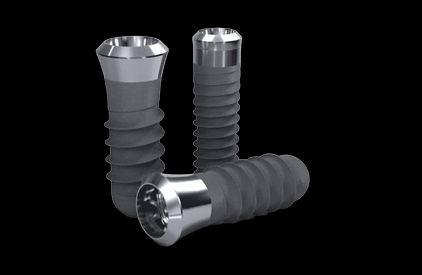
What is a dental implant?
A dental implant replaces the root of a missing tooth and provides support for a fixed restoration.
It is a small biocompatible screw placed in the upper or lower jawbone.
When a single tooth is missing, a Straumann Group implant replaces its root and supports a crown designed to blend with the neighbouring teeth. When several adjacent teeth are missing, two or more implants can support a fixed bridge, restoring function and a harmonious appearance without using the neighbouring teeth for support.
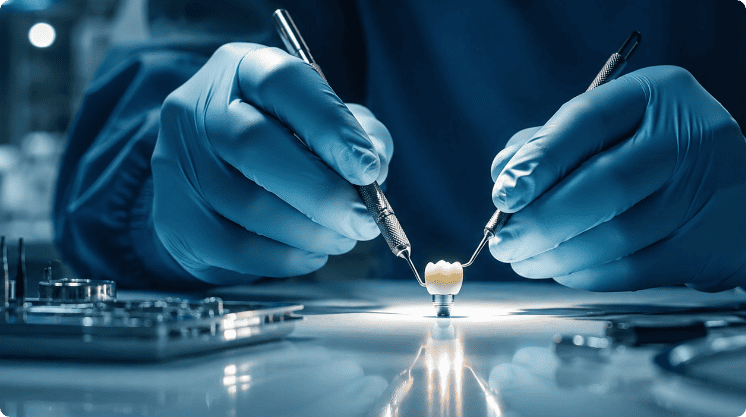

Straumann Pro Arch Center
of Excellence
Smile is a Pro Arch Center of Excellence and a training centre for dental professionals.
Straumann’s recognition reflects both our clinical work and the expertise we share with fellow professionals.
Implant treatment depends on both the system selected and the expertise of the team using it. At Smile, we also share that expertise by teaching clinical protocols to fellow dentists.
ROXOLID® + SLACTIVE®
We use Straumann's premium implant technologies: high-strength Roxolid® alloy and the SLActive® surface to support osseointegration.
STRAUMANN GROUP LIFETIME WARRANTY
Straumann Group implants are covered by the manufacturer's lifetime warranty, subject to its official terms and conditions.
EXPERTISE SHARED THROUGH TEACHING
Darko Slovša also teaches Straumann protocols, training fellow dentists in implantology and complex rehabilitation.
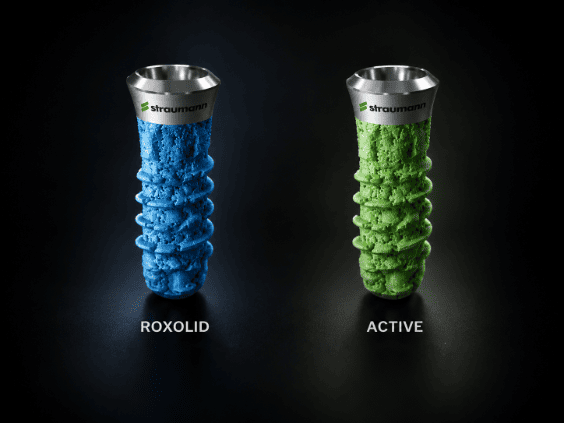
Straumann® implant technology: Roxolid® and SLActive®
For conventional implant treatment, Smile uses Straumann® systems exclusively. Roxolid® is a high-strength titanium–zirconium alloy, while SLActive® is a surface technology designed to support osseointegration during healing.
These two technologies work together in All-on-4/6 treatment, with a Straumann® lifetime warranty.
Complete the form to book your free consultation with the Smile team.
From a missing tooth to a fixed restoration
-
Consultation and
3D diagnosticsWe assess the gap left by the missing tooth, the neighbouring teeth, gums and available bone. A panoramic X-ray and, where necessary, a 3D CT scan help us determine whether an implant can be placed and plan its position.
-
Planning your
implant treatmentWe plan the number, position, angle and depth of the implants around the future crown or fixed bridge, taking your bite and the available space into account from the outset.
-
Placement and
osseointegrationThe implant is placed in the bone under local anaesthesia. In clinically suitable cases, we fit a fixed temporary restoration within 24 hours of surgery. Healing and osseointegration are monitored at scheduled clinical reviews over the following months.
-
Final crown
or bridgeOnce osseointegration has been confirmed, the restoration is made. A single implant supports a crown; several implants may support a fixed bridge. We check chewing function, tooth contacts and appearance before fitting the final restoration.
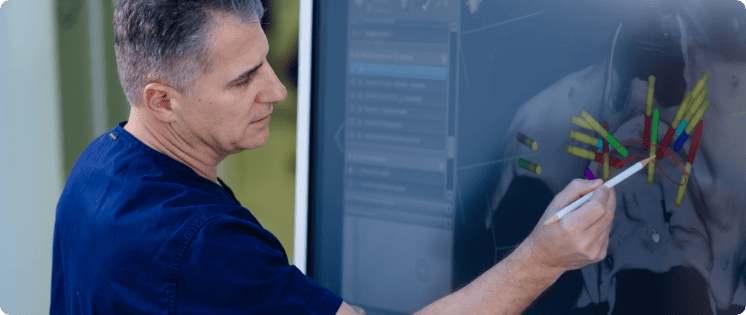
From 3D diagnostics
to surgical planning
Before treatment, we use a digital model of your anatomy to plan the procedure around your clinical needs.
Planmeca 3D CT and 3Shape TRIOS scans provide the anatomical data used for diagnosis and computer-guided implant planning.
PLANMECA 3D CT:
ASSESSING YOUR ANATOMY
3D CT, also known as CBCT, shows the bone, roots, nerve canals and maxillary sinuses in three dimensions. This allows us to assess the available space and identify the structures that need to be protected.
Planmeca's low-dose protocols adjust X-ray exposure to the scan area and the diagnostic information needed. For some scans, Ultra Low Dose mode may deliver a lower dose than a standard panoramic X-ray.
3SHAPE TRIOS:
THE DIGITAL IMPRESSION
The intraoral scanner records your teeth, gums and bite to create a three-dimensional model of your dental arches. It replaces traditional impression materials and allows us to check the scan quality straight away.
For you, this means a more comfortable way to take impressions. For the surgeon, it provides a digital model for treatment planning.
GUIDED IMPLANT DENTISTRY:
PLANNING BEFORE SURGERY
By combining 3D CT and intraoral scans, the surgeon plans implant position, angle and depth, taking the future fixed restoration into account from the outset.
The digital model helps the surgeon assess the available space and plan the procedure around your anatomy and the intended restoration.
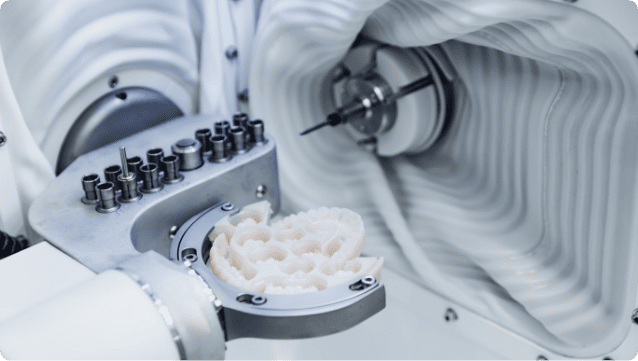
Your restoration,
made in our own laboratory
Design, materials, production and checks are managed within the same clinic.
Our in-house CAD/CAM laboratory brings the clinical team and dental technicians together. We check shape, tooth contacts, shade and comfort on site, discussing adjustments with you as the work progresses. The team oversees materials and production at every stage: the temporary restoration, verification prototype and final restoration. Working together also helps us coordinate try-ins, appointments and production times.
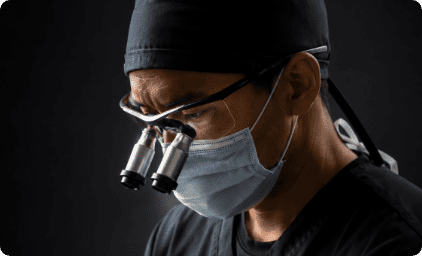
Clear prices and a lifetime implant warranty
Before you begin, you will understand the proposed treatment, its stages, the number of appointments, the expected duration and the total cost.
After your consultation, you will receive a personalised quotation, with each item explained before treatment begins. Once you approve the plan, we schedule appointments so you know when to return and how long each stage is expected to take. Straumann Group implants carry a lifetime manufacturer’s warranty. We explain its conditions, the required follow-up visits and the separate cover for prosthetic components.
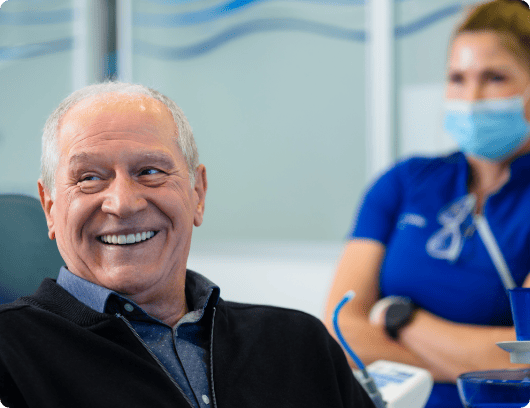
A holistic, integrated
and conservative approach
We preserve as much natural tooth and tissue structure as possible and select biocompatible materials according to your clinical needs.
At Smile, we consider oral health as part of your overall health. Our treatment plans favour procedures that preserve natural teeth, amalgam-free fillings, zirconia restorations and selected ceramic materials. Lasers, ozone and PRP prepared from your own blood complement specific clinical protocols. We choose procedures according to your needs, with the aim of preserving natural teeth, gums and tissues.
Start with a free first consultation
Tell us about your concerns and book a consultation for a clear assessment of your needs.
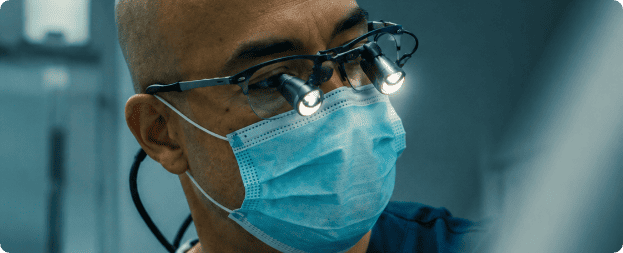
Free first consultation
We assess your oral health, identify any diagnostic tests needed and explain your options before planning treatment.
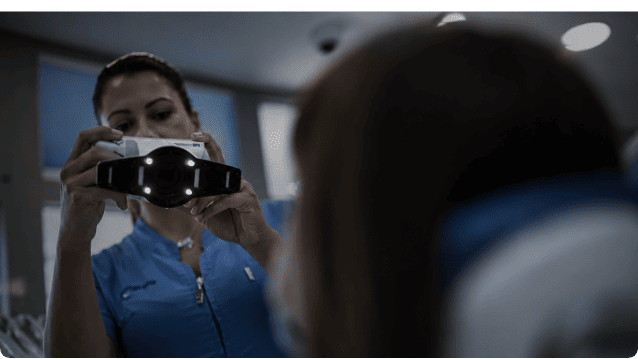
Digital Smile Design:
see your planned smile
Preview the proposed appearance of your smile before treatment begins.
Using artificial intelligence, we combine photographs, intraoral scans and facial data to develop a design that complements your features, lips and expression. The Smile team reviews the proposal with you.
An in-mouth mock-up follows, allowing you to assess the shape, proportions and overall appearance of your smile and discuss adjustments before approving the design.
Frequently asked questions
How do you assess whether I can have an implant?
We assess the gap left by the missing tooth, the neighbouring teeth, gums, bone and available space. At your first consultation, we determine which diagnostic tests you need. A panoramic X-ray and, where indicated, a 3D CT scan help establish whether an implant can be placed and plan its position. We consider its angle and depth alongside your bite and the crown or fixed bridge it will support.
Do I need an implant for every missing tooth?
Not necessarily. For one missing tooth, an implant can replace the root and support a crown. If several adjacent teeth are missing, two or more implants may support a fixed bridge without relying on neighbouring teeth. Implant number and position are determined after assessing bone, space and bite, with the future restoration and its long-term function planned from the outset.
When will I receive my final crown or bridge?
We make the final crown or bridge once we have confirmed osseointegration, the process by which the implant integrates with the bone. During the months after placement, we monitor healing and stability. Where clinical conditions allow, a temporary restoration can be fitted during this period. Before fitting the final restoration, we check your bite, comfort and the appearance of the work.
Is implant placement painful?
Implant placement is performed under local anaesthesia to control pain in the treatment area. Position, angle and depth are planned around your anatomy in advance. Afterwards, healing and integration with the bone are monitored before the final crown or bridge is made. Recovery instructions and follow-up appointments are tailored to the procedure and your clinical condition.
Is a 3D CT scan always needed before implant treatment?
No. A 3D CT scan is not required for every implant. At your first visit, we assess the missing tooth site, neighbouring teeth, gums and bone and determine which images are needed. A panoramic X-ray and, where indicated, 3D CT help establish whether and where an implant can be placed. CT shows bone, roots, nerve canals and sinuses in three dimensions, helping the surgeon tailor implant position, angle and depth to your anatomy.
Complete the form to book your free consultation with the Smile team.
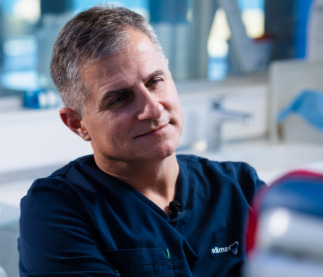
Darko Slovša and the Smile team
Specialist expertise, coordinated care.
Dr Darko Slovša, Dr. Sc., M.Sc., DDS, is a specialist in implantology and oral surgery. The Smile team brings together surgeons, dentists, dental technicians and assistants who work together throughout your treatment.