Digital Smile Design:
preview your smile
before treatment
A personalised simulation to assess smile shape and proportions, share your preferences and understand the proposed treatment.
A smile designed around your face
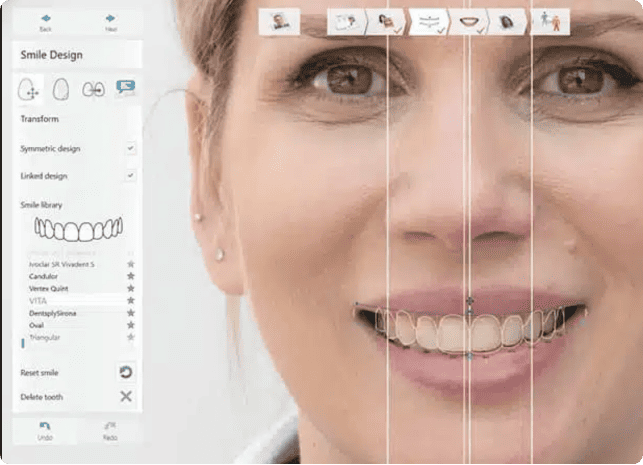
Digital Smile Design, or DSD, is a digital planning method that lets you preview the intended smile after treatment. Photographs, videos and scans are used to assess teeth in relation to your face, lips and expression. The design considers individual teeth and their relationship within the whole smile.
This stage helps you understand the proposed changes before treatment begins. It does not alter your teeth; it provides a visual basis for discussing the goals with your dentist.
Your goals shape the design
You may want to improve tooth shape, proportions or colour without knowing which changes would suit your face. Simulation lets you compare your current smile with a personalised proposal.
Digital Smile Design can support cosmetic treatment and prosthetic rehabilitation. The care required is determined with dental and gum health and the relationship between the arches in mind.
From gathering information to trying the design
-
Consultation, photographs and scans
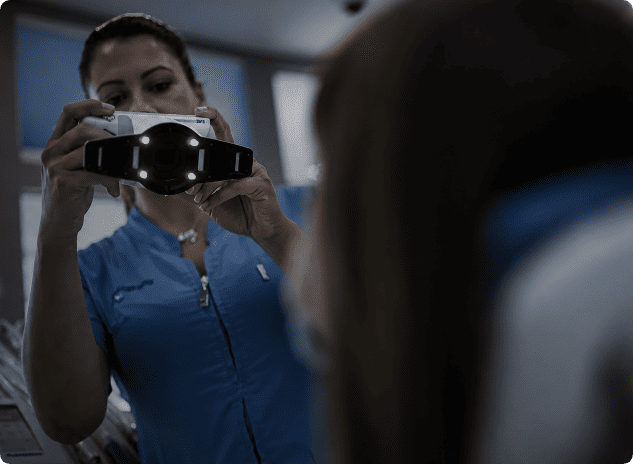
At your consultation, we gather information about your oral health and what you would like to improve. Photographs and videos show your smile and expression.
An intraoral scan records both arches and how your teeth meet, creating a digital model. Your dentist assesses teeth, gums and chewing function to establish which changes are clinically appropriate for you. -
Digital smile simulation
The information collected is used to propose shapes and proportions that complement your facial features and lips. You can view the design and understand the proposed changes.
Your dentist and dental technician develop the three-dimensional design, considering appearance and function together. This model is used to prepare the in-mouth preview, allowing you to discuss a personalised proposal before treatment. -
An in-mouth preview of your smile
The design is transferred to your mouth using a silicone mould and temporary material. This creates a preview of the proposed tooth shapes, known as a mock-up.
You can observe tooth shape and its relationship with your lips without having your teeth reduced for this preview. You can smile and speak during the try-in. Your observations help identify adjustments; the mock-up is not the final restoration. -
Adjustments and treatment planning
Feedback during the try-in guides any adjustments. New photographs or scans record changes and update the design. Once you approve the proposal, the necessary treatment stages are defined. Depending on your clinical needs, these may include veneers, crowns, bridges, implants, orthodontics or gum procedures.
The agreed design guides the choice of treatment, tailored to your clinical needs.
Timing, checks and the limits of simulation
-
A preview is a plan,
not a completed resultSimulation helps you visualise the intended smile, but does not by itself establish that every proposed change is feasible.
The final shape must respect tooth condition, function and the possibilities of the indicated treatment. Clinical assessment connects cosmetic objectives with a feasible plan. -
A temporary preview
is not the final restorationThe mock-up lets you assess the design before treatment. It does not reproduce every feature of the final restoration, such as translucency, strength or behaviour over prolonged use. It is distinct from the temporary restoration protecting teeth during treatment and the verification prototype before the final restoration.
-
Simulation is not surgery
Photographs, scans and simulation do not themselves require surgical healing. The cosmetic try-in described also precedes tooth preparation. Any anaesthesia, precautions and recovery time depend on subsequent treatment, not the digital simulation, and are explained according to the procedures planned.
-
Timing tailored to your treatment
The number of appointments depends on the information needed, any design changes and the treatment required. Once your plan is agreed, you will know the sequence and expected duration of each stage. Digital planning helps coordinate care, while allowing for the time each treatment needs.
A design shared by clinic and laboratory
Photographs, scans and feedback from the try-in connect the work of dentist and dental technician. The design is discussed with you before treatment is defined. Where restorations are planned, the in-house laboratory uses CAD/CAM technology to create them. Clinical checks compare the work with the agreed shapes and functional needs. Your preferences become shared instructions, while dental health and feasibility remain matters for professional assessment.

Frequently asked questions
Is Digital Smile Design only for veneers?
No. Digital Smile Design can support cosmetic treatment and prosthetic rehabilitation, but does not determine treatment by itself. After assessment of teeth, gums, chewing and the relationship between the arches, the plan may include veneers, crowns, bridges, implants, orthodontics or gum procedures. Simulation makes the objective visible for discussion before care; it does not automatically mean fitting veneers or restorations to every tooth.
Can I request changes to the proposal?
Yes. We discuss the smile proposal with you and adapt it to your observations. During simulation and the temporary try-in, you can assess shape, proportions and the relationship with your lips and expression. Agreed changes are recorded with photographs or scans and incorporated into the design, alongside dental health, function and clinical feasibility.
Do my teeth need to be reduced to preview my new smile?
No. Digital simulation does not alter teeth, and the temporary mock-up previews the planned shapes before treatment without reducing teeth. This does not mean the final treatment will always avoid preparation. Any need to reshape teeth depends on the starting situation and chosen treatment. DSD lets you assess the proposal before deciding how it can be achieved clinically.
Will the simulation match the final result exactly?
No. Simulation presents the planned smile and helps explain the objective, but cannot guarantee an identical result in every detail. Final shape must suit tooth condition, function, tissues and the possibilities of the indicated treatment. Temporary try-ins and clinical checks compare the design with the actual situation and allow adjustments before completion.
What is the difference between a simulation and a temporary try-in?
A digital simulation shows a proposed smile on screen using photographs, videos and scans. A temporary try-in, or mock-up, transfers the designed tooth shapes into the mouth with a mould and provisional material. You can assess proportions and the relationship with your lips while smiling and speaking. Both stages help you understand and discuss the proposal before treatment.
Complete the form to book your free consultation with the Smile team.
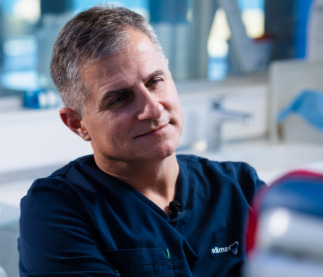
Darko Slovša and the Smile team
Specialist expertise, coordinated care.
Dr Darko Slovša, Dr. Sc., M.Sc., DDS, is a specialist in implantology and oral surgery. The Smile team brings together surgeons, dentists, dental technicians and assistants who work together throughout your treatment.