
Implants or dentures: the psychological and functional transformation of your smile
Returning from holiday often prompts a fresh start. As we prepare for autumn commitments, we take stock of matters we have postponed, including oral health, chewing and the effect they have on daily life.
If you have lived with conventional removable dentures for years, summer may have brought uncomfortable moments: instability while eating a favourite food, concern at a dinner with friends or reluctance to smile in holiday photographs.
If you are considering a stable solution for missing teeth, this article explores the differences between dentures and dental implants. It considers how implant-supported restorations can change daily function and confidence, and why replacing missing teeth is an important decision for long-term wellbeing.
The emotional effect of tooth loss
Losing teeth is more than a clinical event; it can affect how people see themselves and interact with others. Some adapt their lifestyle to removable dentures for decades until limitations feel normal. Dental professionals and psychologists also encounter patients whose tooth loss contributes to social withdrawal.
When fear delays treatment
Patients often tell us they fear surgery or worry that an implant may fail. Uncertainty is understandable. At Poliklinika Smile, we take these concerns seriously and discuss them alongside the daily difficulties treatment may address. Many patients later tell us they wish they had explored their options sooner.
Daily concerns with removable dentures
For some people, removable dentures create a persistent awareness of missing teeth and affect confidence. This can lead to:
- Holding back a smile: smiling with closed lips or covering the mouth with a hand can become an unconscious habit.
- Anxiety at meals: concern that a denture might loosen or move while chewing can make eating out less spontaneous.
- Reduced social confidence: discomfort or self-consciousness may lead people to withdraw from activities they enjoy.
Understanding the functional differences
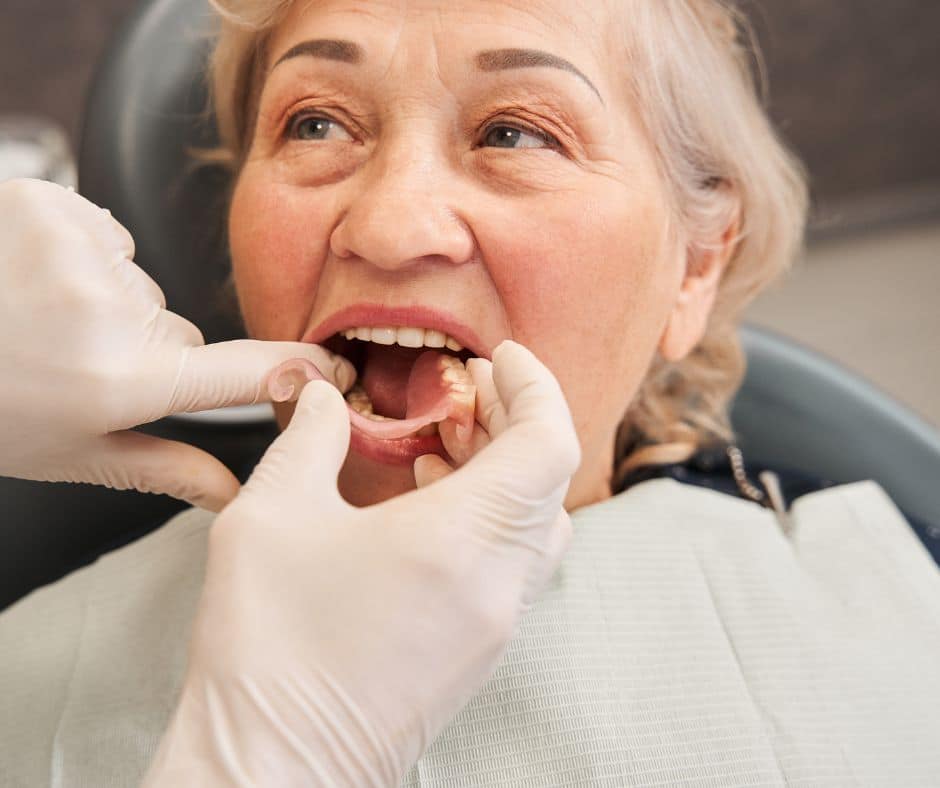
A removable denture and a fixed implant restoration work differently. A denture rests on the gums, while an implant is anchored within the jawbone.
How the jaw changes after tooth loss
After teeth are lost, the jawbone no longer receives the same stimulation from chewing through their roots. It naturally begins to shrink, a process called resorption.
- Bone resorption: a removable denture does not stop this process. Pressure on the supporting tissues may contribute to continued bone loss.
- Facial support: as bone volume decreases, the lower face loses support. Lip position and contours around the mouth may change.
Implants and bone preservation
Dental implants act as artificial roots, transferring chewing forces to the bone. This functional stimulation can help maintain bone around the implants and support facial contours, unlike a denture resting on the gums.
How technology supports treatment today
At Poliklinika Smile, digital technology helps plan implant treatment and the temporary restorations used during recovery.
Digitally guided surgery
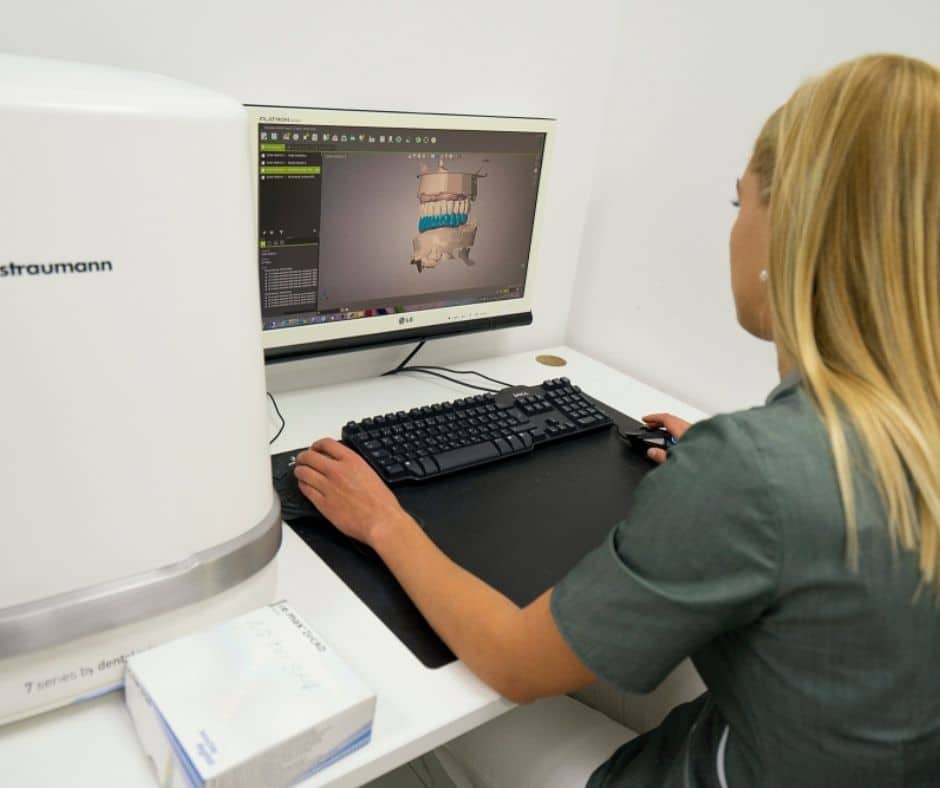
Our approach uses CBCT, a high-resolution 3D X-ray examination, and digital planning to measure the available bone and plan implant positions.
- Less invasive access: precise planning can often allow smaller incisions, potentially reducing swelling and supporting recovery.
- A clearer preview: digital planning helps you understand the intended smile before surgery.
All-on-4 and All-on-6 for a complete arch
For patients missing all teeth in an arch, All-on-4 or All-on-6 uses four or six implants to support a fixed bridge. Fixed temporary teeth are fitted within 24 hours of surgery, supporting appearance and function during healing, with scheduled clinical reviews.
Oral function and general wellbeing
Stable teeth can influence several aspects of daily health and comfort:
- Digestion: chewing is the first stage of breaking food down. Difficulty chewing may affect food preparation for digestion and contribute to digestive discomfort.
- Diet: people who struggle with dentures may avoid raw fruit, vegetables or certain meats. Improved chewing can support a more varied diet.
- Speech: dentures can affect pronunciation. Implant-supported teeth may improve speech stability and confidence in everyday conversations.
Nutrition when chewing is difficult
Some older patients with poor chewing function experience fatigue or digestive difficulties. Denture wearers may avoid fibre-rich foods, nuts or tougher sources of protein, which can affect nutritional intake. Implant rehabilitation aims to improve chewing so a wider range of foods becomes manageable.
Considering cost and quality of life
Implant treatment is a significant investment. A comparison should also consider the ongoing costs of living with dentures.
Ongoing denture costs
These may include:
- Denture adhesives, which can amount to hundreds of euros a year.
- Repairs and relining, as dentures wear or break and the supporting bone changes.
- The wider effects of dietary restrictions and digestive difficulties associated with poor chewing.
Choosing implants means considering long-term function, comfort and confidence alongside cost. The decision should reflect your clinical needs and the improvements that matter to you.
Frequently asked questions about implants
Here are some of the concerns patients commonly raise:
Is implant placement painful?
Surgery is performed under local anaesthesia. Many of our patients describe it as easier than expected and compare the following days with recovery after an extraction.
Am I too old for implants?
Age alone does not determine suitability; overall health matters. Many of our patients have implant treatment after seventy and value the difference it makes.
What if I do not have enough bone?
This is common after many years of denture use. Options may include bone regeneration or specialised approaches such as No Bone implants. At Poliklinika Smile, we begin with 3D CT assessment to understand the available possibilities.
How long do implants last?
With appropriate hygiene and regular reviews, implants can last many years and sometimes a lifetime. They do not develop decay like natural teeth, but gum and supporting tissue care is essential for stability.
What if I have diabetes or another chronic condition?
Chronic conditions do not automatically prevent implant treatment, but their control matters. At Poliklinika Smile, we assess your health thoroughly before surgery and work with your doctor where needed to plan appropriate care.
Towards greater everyday comfort
Implant treatment is a process we undertake together. It involves more than time in the dental chair: collaboration between patient and dentist supports each stage.
Step 1: diagnosis and understanding
We start with a conversation, learning about your needs and introducing the team. 3D imaging maps your jaw so the treatment stages can be planned in advance.
Step 2: adjustment and comfort
You remain supported throughout treatment. Our temporary restorations are designed to provide a natural appearance and support everyday social life while the final work is prepared.
Step 3: integration and stability
After placement, osseointegration allows the titanium implant to bond with the bone. This natural process takes time and provides the foundation for a stable fixed restoration.
Step 4: maintenance
Implants need care comparable to natural teeth. Interdental brushes, an oral irrigator where advised and regular check-ups help maintain your new teeth over the long term.
A decision that affects everyday life
For someone limited by an unstable denture, implant treatment may offer greater confidence and freedom.
The aim goes beyond replacing teeth: it is to help you smile, eat, speak and enjoy daily life more comfortably.
If summer made you reflect on the need for change, an assessment can help you understand your options as autumn begins.
Our team offers a personal approach, attentive care and technology to support your treatment. Visit us to discuss implant dentistry and what may be appropriate for your smile.
What concerns you most about implants: surgery, cost or recovery? Write to us so we can discuss your questions.