In-house
digital dental
laboratory
Digital design, milling, 3D printing and quality checks take place within the clinic, from the initial plan to the final restoration.
-
Clinical care and
laboratory work,
closely coordinatedThe clinical team and dental technicians share the same information and communicate directly throughout design, try-ins and completion.
-
In-house
CAD/CAMOur team manages design, materials and production in house, overseeing each stage of your restoration.
-
Adjustments
on siteWe check shape, tooth contacts and shade on site. Some adjustments can be made during your appointment.
-
Temporary, prototype,
final restorationChewing, speech and appearance are checked through successive try-ins before the final restoration is completed.
Why an in-house laboratory makes a difference
A crown, bridge or full-arch restoration needs to work comfortably in your mouth. We assess your bite, speech, gum contours and the appearance of the teeth together.
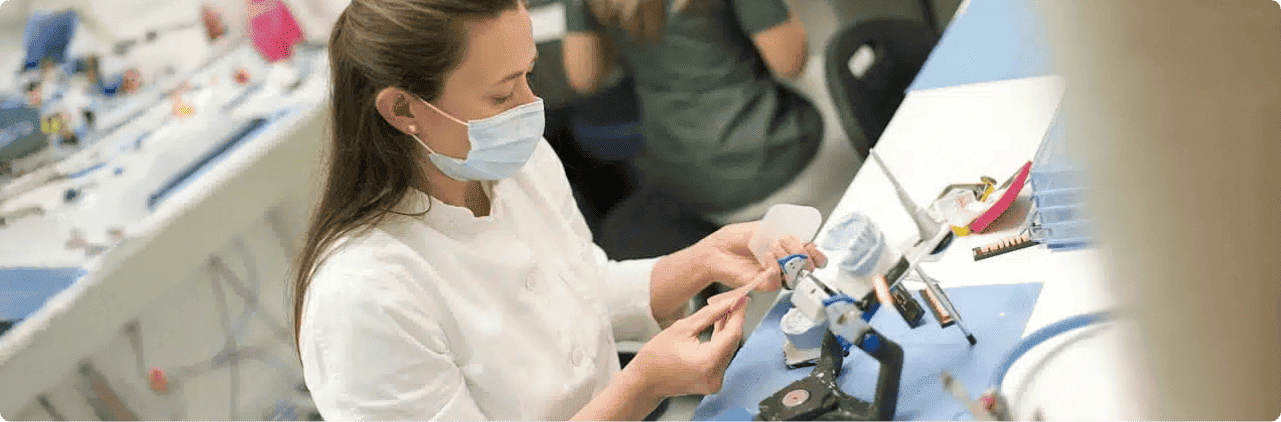
Having the laboratory within the clinic allows the dentist to discuss the work directly with the technician making it. Our team oversees material selection, fabrication and checks throughout.
You can share how the restoration feels during try-ins and agree adjustments with your dentist. Direct discussion with the dental technician allows details to be refined before the final restoration is made.
From digital model to dental restoration
CAD/CAM stands for computer-aided design and manufacturing. Digital data collected during your appointment are used to design and produce the restoration.
-
Clinical requirements
We begin with your clinical needs, the condition of your teeth and gums, and the function the restoration needs to provide.
-
CAD design
Shape, thickness and contacts between teeth are designed digitally according to the clinical requirements.
-
CAM production
The restoration is milled or 3D-printed using the material specified in the prosthetic treatment plan.
-
Checks and finishing
The laboratory checks the fit, surface finish and shade. Your dentist then assesses your bite and how the teeth meet in your mouth.
A laboratory equipped for
complex restorations
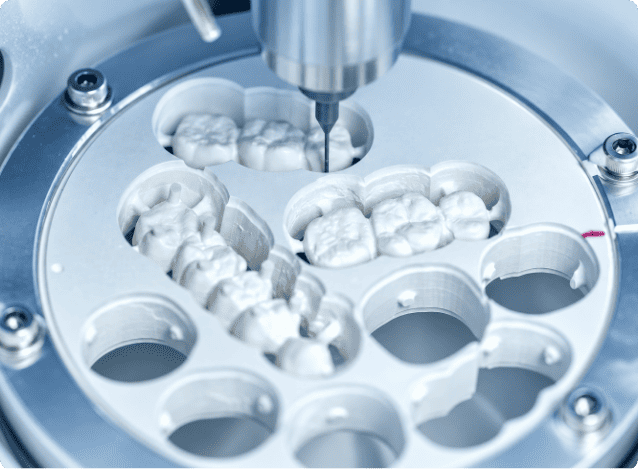
The laboratory has two CAD/CAM milling systems: Ivoclar PrograMill PM7 and Wieland. It also uses a Straumann P40 3D printer for work within the digital workflow.
Milling creates restorations from blocks or discs; 3D printing produces components using compatible materials. These technologies serve different purposes and are selected according to the work required.
We use materials from Ivoclar Vivadent and DeguDent Dentsply Sirona. We select the material, thickness, shade and fabrication method according to the restoration’s function, position and expected chewing forces.
What we create in our laboratory
ZIRCONIA-CERAMIC CROWNS
To restore a damaged tooth, replace an old crown or complete an implant restoration. Shape, tooth contacts and shade are designed to complement the neighbouring teeth.
FIXED DENTAL BRIDGES
To replace one or more missing teeth, with support from natural teeth or implants. The design takes account of these supports, your bite, gum contours and the distribution of chewing forces.
TEMPORARY RESTORATIONS AND PROTOTYPES
A temporary restoration supports you during treatment. A prototype lets you assess shape, chewing and speech, and agree adjustments before the final restoration is made.
FULL-ARCH IMPLANT REHABILITATION
For All-on and No Bone treatment, the implants and restoration are planned together, from the temporary teeth to the final restoration.
Different materials for different stages
PMMA for temporary restorations
We also produce temporary teeth digitally in PMMA, an acrylic resin used to support everyday function during the intermediate stages of treatment.
Shape and shade are selected to reflect the design, while recognising that the temporary restoration is not the final result.
Zirconia and ceramic for final restorations
Zirconia is a strong ceramic used for crowns and bridges. A restoration can be made entirely from zirconia or layered with ceramic to personalise its appearance.
The choice depends on tooth position, chewing function and the characteristics of the rehabilitation.
Three stages, with a prototype before the final restoration
| STAGE | HOW IT WORKS | THE REAL VALUE FOR YOU |
|---|---|---|
| TEMPORARY RESTORATION | A temporary restoration is made to protect prepared teeth or support healing after implant placement. | Continuity during treatment: you keep function and appearance while the clinical and technical stages are completed. |
| VERIFICATION PROTOTYPE | Before the final restoration, a prototype is made and tried in your mouth, as set out in the treatment plan. | A practical check: you can assess comfort, chewing, speech and appearance, and tell us about any adjustments needed. |
| FINAL RESTORATION | After clinical checks and your approval, the final restoration is made in the materials specified in the plan. | Greater predictability: the final restoration follows a shape that has already been tried, adjusted and agreed. |
Precision also comes from collaboration
Our dental technicians work closely with the clinical team. They share information on function, tissues and treatment objectives, together with the patient’s observations. Continuing education supports the development of techniques and materials. Our technicians also teach fellow professionals in implant rehabilitation at national and international level.
This expertise matters in complex restorations: a change in shape or tooth contacts can affect chewing and comfort.
Adjustments throughout treatment
With the laboratory on site, we can assess fit, tooth contacts, shade and proportions together. If something needs adjusting during a try-in, your dentist can discuss it directly with the technician while you are still at the clinic.
Some adjustments can be made during the same visit; other work requires more time and further checks.
In-house control also helps coordinate try-ins and production. Once your plan is agreed, you will know the number of appointments and expected duration of each stage, with the necessary checks included.
Start with a free first consultation
Tell us about your concerns and book a consultation for a clear assessment of your needs.
Free first consultation
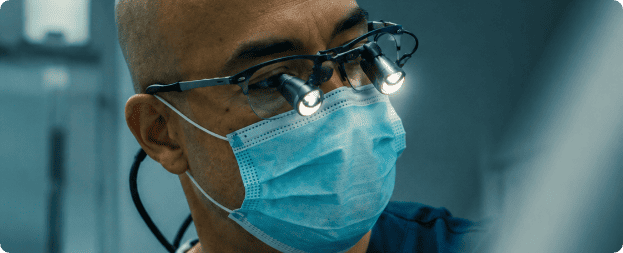
We assess your oral health, identify any diagnostic tests needed and explain your options before planning treatment.
Frequently asked questions
What is a CAD/CAM dental laboratory?
CAD/CAM stands for computer-aided design and manufacturing. We use digital information collected during your appointment to design the restoration’s shape, thickness and tooth contacts, then mill or 3D-print it in the selected material. The laboratory checks the fit, finish and shade, and your dentist checks your bite in your mouth. Clinical checks remain essential throughout.
Which restorations are made in the in-house laboratory?
Our laboratory makes crowns, fixed bridges, temporary restorations, verification prototypes and full-arch implant restorations, including All-on-4/6 and No Bone. Materials and methods depend on the clinical plan. The workflow may include CAD/CAM milling and 3D printing on site. During try-ins, dentist and technician directly assess shape, contacts, shade, chewing, speech and comfort before completing the final restoration.
What is the benefit of having a laboratory at the clinic?
The main benefit is close collaboration between your dentist and the dental technician. Working from the same information, they can assess shape, tooth contacts, shade and comfort together during try-ins. Some adjustments can be made while you are at the clinic; more complex changes may require additional laboratory work, checks and appointments.
What is the difference between a temporary restoration and a prototype?
They serve different purposes. A temporary restoration protects prepared teeth or supports function and appearance during implant healing and intermediate stages. A prototype is tried in the mouth before the final restoration to assess comfort, chewing, speech and appearance. Any changes are agreed before final production. The final restoration is made in the planned materials only after clinical checks and approval.
Can an in-house laboratory reduce treatment time?
It can reduce waiting between design, production and adjustments because the team works on site. Some changes can be made during the same visit. Complex rehabilitation or substantial alterations may still require further laboratory work and checks. Your agreed plan sets out the expected number of appointments and duration of each stage.
Complete the form to book your free consultation with the Smile team.
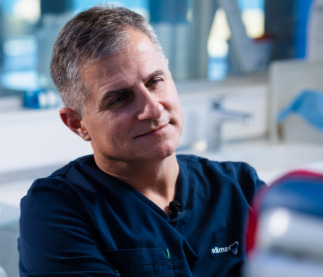
Darko Slovša and the Smile team
Specialist expertise, coordinated care.
Dr Darko Slovša, Dr. Sc., M.Sc., DDS, is a specialist in implantology and oral surgery. The Smile team brings together surgeons, dentists, dental technicians and assistants who work together throughout your treatment.