Apicectomy:
treating infection
to preserve your tooth
Root-end surgery to treat persistent infection and preserve a tooth that has already had root canal treatment.
When infection persists after root canal treatment
An apicectomy is an endodontic surgical procedure that removes the tip of the root, known as the apex, together with the surrounding inflamed tissue. The end of the canal is then sealed to support healing. It is considered when infection persists or returns after root canal treatment. Canal branches can make some areas of the root difficult to reach and treat fully. The aim is to retain the natural tooth when its structure and the surrounding tissues allow.
Signs that need attention
Pain, swelling or discomfort around a tooth that has had root canal treatment requires assessment. A small opening that drains pus may appear on the gum. This is the opening of a sinus tract, also called a fistula.
The opening may appear and disappear, sometimes without pain. This does not mean the infection has resolved; its source needs to be identified before treatment is planned.
From endodontic assessment to surgery
-
Considering retreatment
before surgeryBefore recommending an apicectomy, the dentist assesses whether root canal treatment can be repeated. Retreatment allows the canals to be reopened, the previous filling material removed and the affected areas treated.
Surgery is considered when retreatment is not feasible or has less favourable prospects. The decision depends on the cause of the problem and the condition of the tooth, not simply on the presence of a crown or bridge.
-
Diagnosis before
an apicectomyAt your consultation, we assess symptoms, previous treatment, the tooth and its supporting tissues. Tell us about medical conditions, medicines, supplements and allergies.
Intraoral X-rays show the root and surrounding area. A 3D CT scan may supplement assessment when two-dimensional images do not provide enough information; it is not performed automatically in every case.
The stages of an apicectomy
-
Anaesthesia and
access to the rootSurgery is performed under local anaesthesia. The surgeon makes a small incision in the gum and accesses the area, creating the space needed in the bone to reach the root tip.
-
Removing the root tip
and inflamed tissueThe inflamed tissue around the root and the last few millimetres of the root tip are removed. The root surface is also checked for fractures that could affect whether the tooth can be preserved.
-
Preparing and
sealing the canalThe end of the canal is prepared with dedicated instruments and sealed with a suitable material. This root-end filling, also called a retrograde filling, is placed from the tip of the root through the surgical opening.
-
Closure and follow-up
Once treatment is complete, the gum is repositioned and sutured. You receive postoperative instructions and a schedule of follow-up appointments, first to check the surgical site and later to monitor healing around the root.
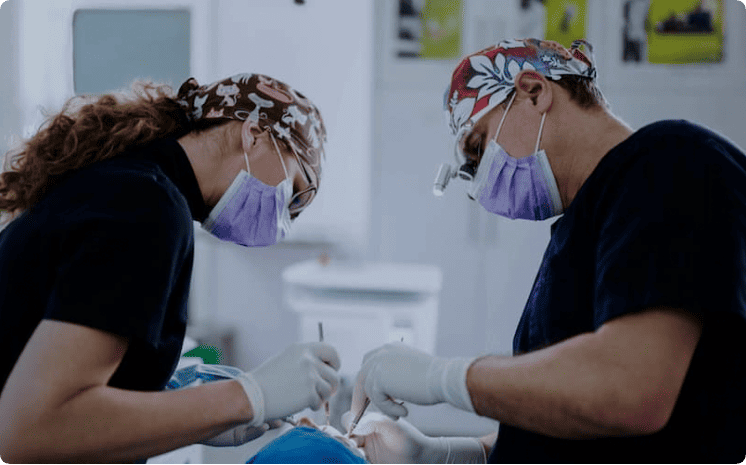
THE ROLE OF THE MICROSCOPE AND ULTRASONICS
The operating microscope magnifies and illuminates the treatment area. Ultrasonic instruments allow the canal end to be prepared through a limited opening.
These tools support examination and preparation of the root. Whether the tooth can be preserved still depends on the diagnosis, existing conditions and response to treatment.
HOW LONG SURGERY TAKES
The procedure typically takes around 30 to 90 minutes. Duration varies with the tooth's position, the number of roots involved and the difficulty of access.
Surgery on front teeth is generally shorter than surgery on molars. An estimate is provided after your assessment.
Healing and follow-up after an apicectomy
-
The first days after surgery
Swelling, tenderness and minor bruising may occur. You receive advice on medication and measures to manage them. Swelling may increase initially before subsiding.
Contact the clinic if pain or swelling continues to increase, fever develops or bleeding persists. Also report altered sensation that continues after the anaesthetic has worn off.
-
Protecting the surgical site
Wait until the anaesthetic has worn off before eating. Initially avoid hard or sticky foods and protect the treated area when chewing.
Continue cleaning the rest of your mouth. You receive instructions on cleaning near the stitches without injuring the gum. Smoking can impair healing and should be avoided as advised.
-
Initial recovery and bone healing
Discomfort and swelling usually lessen over the following days, but may take several weeks to disappear. Stitches are checked and, where necessary, removed according to the schedule.
Bone healing continues over the following months. Even when the tooth no longer causes discomfort, clinical examinations and X-rays are needed to monitor healing around the root.
-
Possible complications and limitations
Persistent infection or an irreparable root fracture may require further treatment, including extraction.
Risks also depend on location: the upper back teeth are close to the maxillary sinus, and some areas of the lower jaw are close to nerves. These relationships are assessed before surgery and explained at your consultation.
A complete assessment to preserve your tooth
Assessment for an apicectomy draws on both endodontics and oral surgery. We consider previous treatment, the condition of the root, existing restorations and surrounding tissues before planning the procedure.
We assess more than access to the root. Alternatives to surgery and the realistic prospects of preserving the tooth are also considered. At your consultation, we explain the expected benefits, risks and limitations.
Care includes wound reviews and checks of bone healing. Preserving the tooth means monitoring its response over time, beyond completing surgery.

Frequently asked questions
Does a root infection always require an apicectomy?
No. Before recommending an apicectomy, the dentist assesses whether the root canal treatment can be repeated from inside the tooth. The choice depends on the cause, root condition, previous treatment and realistic prospects of preserving the tooth. Intraoral X-rays and, where necessary, 3D CT help identify the affected area. Surgery is considered only when alternatives are less suitable. The aim remains to avoid unnecessary surgery.
Are an apicectomy and root canal treatment the same thing?
No. Root canal treatment cleans the canals from inside the tooth. An apicectomy surgically removes the root tip and surrounding inflamed tissue and seals the canal end. It is considered when infection persists or returns after canal treatment and retreatment is not feasible or has less favourable prospects. The aim is to preserve the tooth with the least extensive appropriate procedure.
Is an apicectomy painful?
The procedure uses local anaesthesia to control pain. Swelling, tenderness and minor bruising may occur afterwards, especially in the first days. You receive medication and recovery instructions. Contact the clinic if pain or swelling keeps increasing, fever develops, bleeding persists or altered sensation continues after the anaesthetic wears off. Do not simply wait for these symptoms to resolve.
How long is recovery after an apicectomy?
Discomfort and swelling usually diminish over the following days but may take several weeks to disappear fully. Bone healing continues for months, even when the tooth no longer causes symptoms. Stitches are checked and removed where needed according to the schedule. Clinical and radiographic reviews assess the wound and monitor the root area before treatment is considered complete.
Will my crown or bridge need to be removed?
Not necessarily. An apicectomy reaches the root tip through the gum, so a crown or bridge does not automatically need removal. Before surgery, we assess the restoration, previous root canal treatment, root and surrounding tissues. The decision depends on the cause and whether the tooth can be preserved. A suitable restoration may remain during surgery.
Complete the form to book your free consultation with the Smile team.
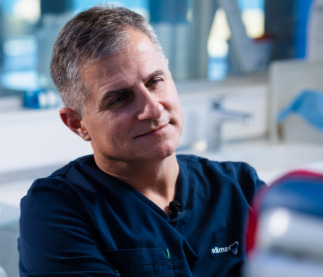
Darko Slovša and the Smile team
Specialist expertise, coordinated care.
Dr Darko Slovša, Dr. Sc., M.Sc., DDS, is a specialist in implantology and oral surgery. The Smile team brings together surgeons, dentists, dental technicians and assistants who work together throughout your treatment.