General dentistry:
prevention and care
for your teeth
We assess teeth, roots and gums to treat the problem while preserving as much natural tissue as possible.
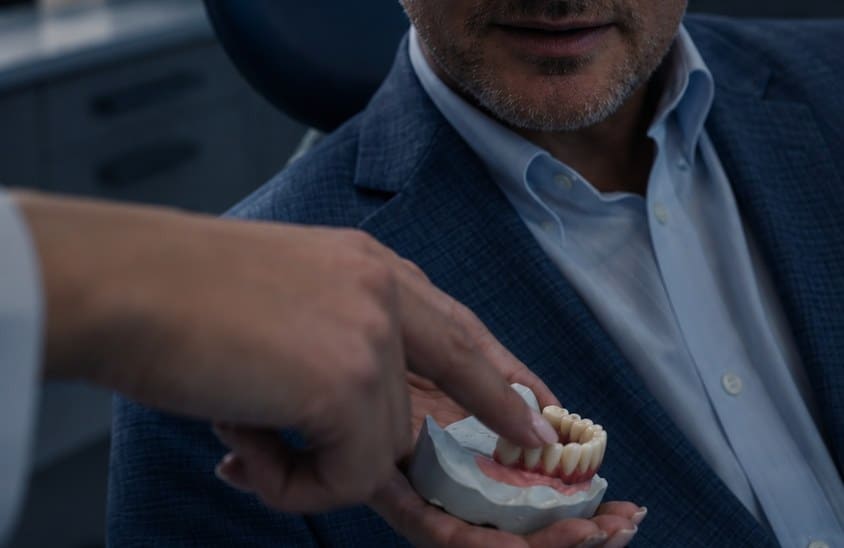
Prevention, treatment and preservation of natural teeth
General dentistry covers the everyday health of teeth, gums and the mouth, from childhood to adulthood.
Restorative dentistry treats decay and damage to teeth. Alongside professional cleaning, root canal treatment and children’s dentistry, it helps prevent and treat oral health problems throughout life.
These four areas share one aim: identify problems, treat them promptly and preserve as many natural teeth as possible.
Four areas of care for
oral health
Pain is not always the first sign of a problem. Decay, tartar and inflammation can develop gradually, while children’s check-ups also monitor the development of their teeth.
We assess your needs before recommending the appropriate care and extent of treatment.
FROM PREVENTION TO TREATMENT
Each area contributes at a different stage: identifying problems, treating them and maintaining oral health.
EARLY DIAGNOSIS
Targeted check-ups help identify decay and gum problems, even when they cause no pain.
PRESERVING YOUR NATURAL TEETH
Every treatment begins by considering whether the natural tooth can be preserved and restored.
LONG-TERM PREVENTION
Professional cleaning and regular check-ups help maintain the oral health achieved through treatment.
Professional oral hygiene
-

Removing plaque and tartar
Plaque is a bacterial deposit that forms on teeth every day. If it is not removed, minerals in saliva can turn it into tartar.
Tartar adheres to teeth and cannot be removed by brushing. Its surface encourages further plaque accumulation and may contribute to gum inflammation.
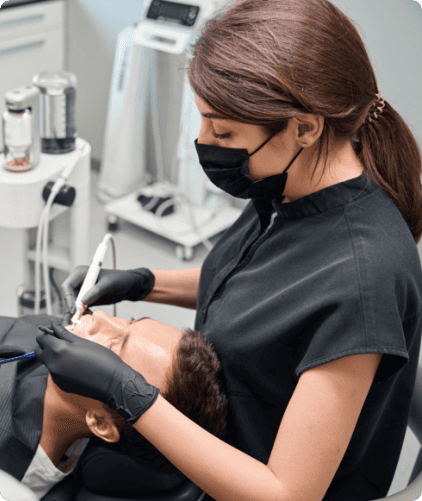
Your appointment begins with an assessment of teeth and gums. Deposits are removed using an ultrasonic instrument and water spray.
If tartar also affects root surfaces beneath the gums, deeper cleaning is considered. This procedure, sometimes called curettage, allows the roots to be cleaned without necessarily requiring surgical access.
-

Air polishing, polishing and daily care
After tartar removal, air polishing removes surface stains and pigmentation. A jet of air and water is combined with a specific sodium bicarbonate-based powder, selected for the planned treatment.
Polishing completes the cleaning by smoothing the treated surfaces. Air polishing is different from whitening: it removes external staining without changing the internal colour of the tooth.
Professional cleaning does not replace daily oral hygiene. You will receive advice on brushing and cleaning between your teeth, tailored to your mouth.
Recall appointments are scheduled according to gum health, tartar formation and previous treatment.
Tooth decay and tooth-coloured fillings
-
Identifying decay and preserving healthy tissue
Decay develops when plaque bacteria turn sugars into acids that damage tooth tissues. It can progress from enamel into dentine without immediate pain; sensitivity or discomfort when chewing may develop later.
At your examination, we check for decay, cracks, small fractures and problems with old fillings. A digital intraoral X-ray is used when areas that cannot be seen directly need further investigation.
Not every early lesion requires a filling. Before a cavity forms, preventive measures and monitoring may be appropriate.
When a tooth needs restoring, we remove damaged tissue while preserving as much natural tooth structure as possible. Local anaesthesia is used according to the procedure and your sensitivity.
-
Composite fillings or ceramic inlays and onlays
We mainly use a dental laser to remove decay, according to the tooth and lesion. It does not automatically replace all other instruments: the choice depends on the lesion and any existing restorations.
After cleaning, a tooth-coloured composite resin filling is placed to match the tooth’s natural shade. Restorations can also repair chipped or fractured teeth.
For more extensive tissue loss, a ceramic inlay or onlay may be considered, designed and produced with CAD/CAM technology in our in-house laboratory.
Inlays, onlays and overlays differ in how much of the tooth they restore. Material and shape are selected according to the remaining tissue, tooth position and chewing forces.
Root canal treatment and endodontics
-
-
When the pulp needs
treatmentBeneath enamel and dentine lies the pulp, which contains nerves, blood vessels and connective tissue. Deep decay, a fracture or trauma can damage it and cause inflammation or infection.
Spontaneous pain, persistent sensitivity, pain on chewing or swelling require assessment. Root canal treatment is indicated when the pulp cannot be kept healthy.
Endodontic treatment removes the affected tissue and cleans, disinfects and seals the canals within the roots.
A mature tooth can continue to function without its pulp if enough healthy structure remains for it to be properly restored. Our aim is to preserve the natural tooth.
-
Measurement, disinfection and
restorationAfter local anaesthesia, an opening is made into the tooth. Canal length is measured using an electronic apex locator and checked with intraoral X-rays.
The canals are cleaned and disinfected. Lasers and ozone may support disinfection, but do not replace mechanical preparation and irrigation of the root canals.
Once cleaning is complete, the canals are filled and sealed. The visible part of the tooth is restored with a filling or protected with a crown, depending on the remaining tissue.
Treatment may require one or more appointments. The number depends on the infection, canal anatomy and necessary checks; there is no single duration for everyone.
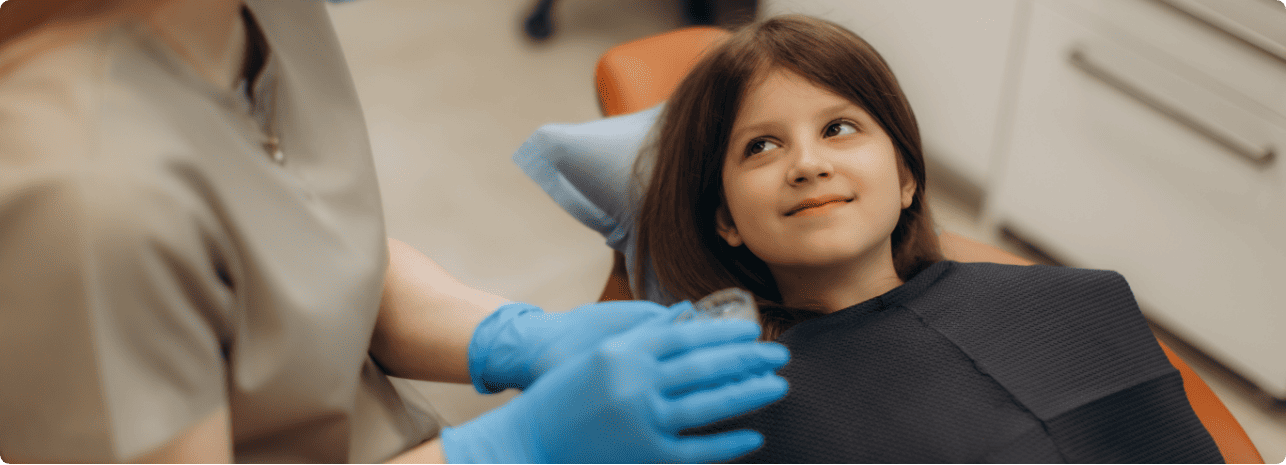
Children’s dentistry
-
Dental care as your
child growsPaediatric dentistry, also known as paedodontics, looks after the teeth, gums and mouth from infancy to adolescence. Regular check-ups monitor development and help identify problems early.
The first baby teeth usually emerge at around six months, with individual variations. The transition to permanent teeth begins at around six or seven years.
Baby teeth help children chew and speak and maintain space for permanent teeth. Decay and inflammation therefore need assessment even in teeth that will eventually fall out.
During an examination, we check oral hygiene, gum health and dental development to identify care needs before pain begins.
-
Early dental visits,
before problems ariseA first dental visit is recommended when the first tooth appears, and no later than the first birthday. Becoming familiar with the setting before treatment is needed helps children avoid associating dental visits only with pain.
We build trust at your child’s pace, with age-appropriate explanations and time to become comfortable with the dentist.
Parents receive advice on hygiene and eating habits that protect baby and permanent teeth. Guidance is adapted to the child’s abilities and the support needed at home.
If a cavity needs treating, the procedure is explained in an understandable way. Subsequent check-ups monitor the child’s response and dental development.
Check-ups and maintenance after treatment
-
Personalised cleaning
and recall visitsCheck-up frequency depends on gum health, decay risk and tartar build-up. Professional cleaning is scheduled as needed and complements daily oral hygiene.
-
Monitoring fillings
and inlaysRestorations do not make a tooth immune to new decay or fractures. At check-ups, margins and contacts are assessed; persistent discomfort should be reported to your dentist.
-
After root canal
treatmentTemporary sensitivity may occur during the first few days. Severe or increasing pain requires a review. The tooth should be protected until the planned restoration is complete.
-
Check-ups as children
growWe monitor children’s oral hygiene, baby teeth and emerging permanent teeth. Recall visits are tailored individually, involving parents in prevention and necessary treatment.
Preserve before replacing
We choose treatment according to the extent of the problem, with the aim of preserving natural teeth.
Tooth-coloured composite fillings, ceramic inlays made in our laboratory and electronic canal measurement serve different needs. Lasers and ozone support specific treatment stages without replacing clinical assessment. Before proposing extraction, we consider whether the tooth can be treated and restored, coordinating diagnostics, restorative dentistry and endodontics.
A clear plan before you begin
After your assessment, you receive a personalised quotation based on the treatment you need.
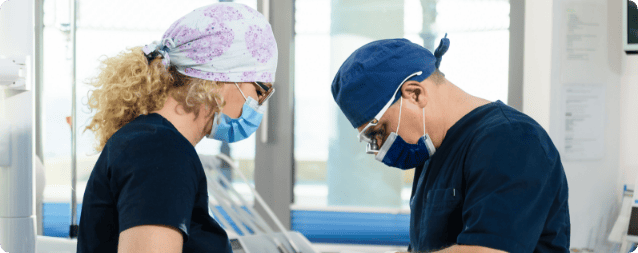
At your first visit, we examine your teeth, gums and existing dental work. We explain the recommended care, planned appointments and follow-up visits, together with your personalised quotation, so you can make an informed decision.

Frequently asked questions
How often is professional cleaning recommended?
There is no single interval for everyone. Recall visits are planned according to gum health, decay risk, tartar formation, previous treatment and the quality of daily oral hygiene. The schedule may change if your oral health changes. Professional cleaning removes deposits that brushing cannot eliminate, but daily cleaning remains essential for maintaining healthy teeth and gums over time.
When does tooth decay require root canal treatment?
Root canal treatment is considered when decay, a fracture or trauma damages the pulp, the inner tissue containing nerves and blood vessels. Pain alone does not establish this. Examination, clinical tests and X-rays distinguish a lesion suitable for a filling from an endodontic problem. If the pulp cannot be kept healthy, the canals are cleaned, disinfected and sealed.
When is an inlay needed instead of a filling?
A direct filling is used for smaller tissue loss, while an inlay may be considered for a more extensive restoration. At Poliklinika Smile, ceramic inlays are designed and made with CAD/CAM technology in our laboratory. Selection depends on remaining tissue, tooth position and chewing forces. Inlays, onlays and overlays differ in the extent of the area restored.
Can a tooth be preserved after root canal treatment?
Yes, if the root, supporting tissues and remaining structure allow. Root canal treatment removes damaged tissue and disinfects the canals, but the tooth then needs appropriate restoration and protection. Depending on the remaining tissue, the visible part can be restored with a filling or protected with a crown. Check-ups, daily hygiene and long-term monitoring remain necessary.
When should a child have their first dental visit?
A first visit is recommended when the first tooth appears and no later than the first birthday. We check teeth, gums and dental development and advise parents on hygiene and diet. Familiarity with the clinic before pain or decay develops can help the child feel more relaxed. Later check-ups follow growth and the eruption of permanent teeth.
Complete the form to book your free consultation with the Smile team.
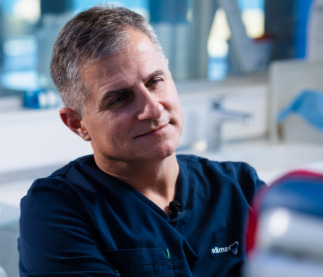
Darko Slovša and the Smile team
Specialist expertise, coordinated care.
Dr Darko Slovša, Dr. Sc., M.Sc., DDS, is a specialist in implantology and oral surgery. The Smile team brings together surgeons, dentists, dental technicians and assistants who work together throughout your treatment.