Dental veneers:
shape and shade
tailored to you
Thin restorations to refine the appearance of your teeth, following assessment of enamel, gums and chewing function.

Refining your smile while preserving natural teeth
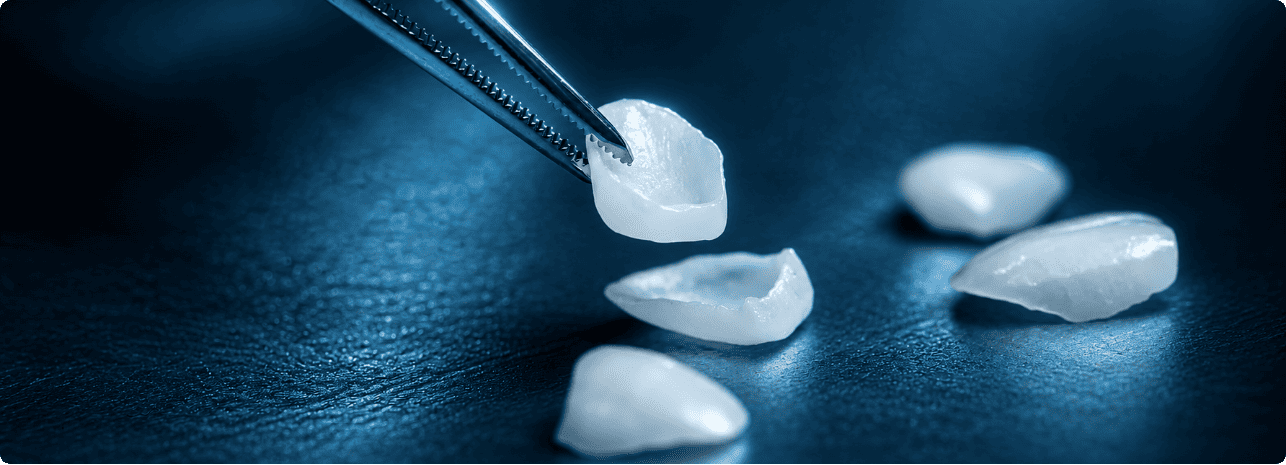
Dental veneers are thin restorations bonded to the front surfaces of natural teeth. They can change colour, shape and proportions without covering the entire tooth as a crown does.
They may be considered for small chips, short or worn teeth, limited gaps and discolouration. The choice depends on tooth structure and oral health.
Not every cosmetic concern requires veneers. If only colour or alignment needs changing, your dentist also considers whitening or orthodontic treatment to preserve natural tissue where possible.
Materials and stages of veneer treatment
-
Ceramic and composite veneers
A ceramic veneer is made in the laboratory to fit the tooth and then bonded to its surface. Colour and proportions are defined in the design.
Direct composite veneers are shaped by the dentist using a material similar to that used for fillings. They may be completed in one visit, but their appearance and maintenance differ from ceramic. -
Minimal preparation and no-prep veneers
A small amount of tooth tissue may be removed to create the space needed, preserving as much enamel as possible. The extent depends on the design.
No-prep veneers do not require this mechanical reduction. They are an option when adding material can create suitable shapes without excessive bulk. Small teeth alone do not establish suitability. -
Consultation and smile design
At your consultation, we examine teeth, gums, previous restorations and bite contacts. Decay and inflammation must be treated before cosmetic care. Photographs and digital scans document the starting situation. Digital Smile Design allows discussion of proposed changes. X-rays are prescribed according to clinical need: scans record surfaces, but do not show the inside of teeth.
-
Wax-up and in-mouth preview
A wax-up is a model of the proposed tooth shapes. It is used to create a mock-up, a temporary preview placed over the teeth before any preparation.
You can assess proportions and the relationship with your lips and discuss changes with your dentist. This preview helps agree the design but does not exactly reproduce the colour, translucency or strength of the final ceramic. -
Preparation, impressions
and temporary veneersWhere needed, preparation follows the agreed design. An impression of the prepared teeth is then taken so the laboratory can make the ceramic veneers.
Temporary veneers reflect the preview shapes and protect the teeth during fabrication. Appointments, try-ins and expected timing are explained beforehand. Production may take 7–10 days, but this is not the total treatment duration. -
Ceramic try-in and bonding
Before bonding, the ceramic veneers are tried in to check shape, shade and fit. Any corrections are made before permanent bonding.
The dentist prepares the surfaces and uses an adhesive cement suitable for the material to bond each veneer to the tooth. After excess cement is removed, the margins and bite contacts are checked.
Adapting to and caring for dental veneers
-
Sensitivity and initial adjustment
Where needed, local anaesthesia controls pain during preparation. Afterwards, you may experience temporary sensitivity, particularly to hot or cold.
New shapes can take a short time to adjust to, especially if tooth length changes. If discomfort persists or your teeth meet differently when biting, contact the clinic for a check. -
Preparation and possible complications
Enamel removed during preparation does not grow back. Even limited reduction is therefore a change to consider before treatment.
Veneers can chip or detach and may need repair or replacement. Preservation of the tooth and restoration is assessed individually: thinness and biocompatibility do not mean an absence of risk. -
Longevity and protection from excessive forces
Veneers can last many years, but should not be regarded as permanent restorations. Their lifespan depends on material, bonding, tooth condition and maintenance.
Grinding, clenching and habits such as biting pens or nails can damage veneers. Mention these behaviours at your consultation so their effect on the design and any protective measures can be assessed. -
Hygiene and colour stability
Ceramic is generally less susceptible to surface staining than composite. Teeth and veneer margins still need careful cleaning.
Brushing, interdental cleaning and professional check-ups help keep surrounding tissues healthy. Changes in colour or gum irritation should be assessed rather than accepted as inevitable with time.
From smile design to trying in your veneers
At Smile, photographs, digital impressions and Digital Smile Design connect clinical assessment with cosmetic planning. The mock-up lets us agree shapes and proportions before any tooth preparation. Ceramic veneers are made in our in-house dental laboratory using CAD/CAM technology and materials from Ivoclar and Dentsply Sirona. Dentist and technician coordinate fabrication, try-ins and corrections within the same clinic. Before bonding, you can assess the appearance. Your clinician checks fit, margins and tooth contacts to confirm the restoration meets the design and chewing requirements.

Frequently asked questions
Do veneers always require tooth reduction?
Not always. In suitable cases, no-prep veneers can be fitted without mechanically reducing enamel. In other cases, limited preparation is needed according to the design, preserving as much natural tissue as possible. The choice depends on tooth position, volume and colour, available space and the intended result. Removed enamel does not grow back, so any preparation must be assessed and explained before treatment begins.
What is the difference between a veneer and a crown?
A veneer mainly covers the front surface to change colour, shape or proportions. A crown covers more of the tooth and is considered for greater structural damage. Your dentist assesses remaining tissue, dental health, chewing function and cosmetic objectives. Where possible, the least extensive procedure consistent with clinical needs and restoration durability is preferred.
Can veneers straighten crooked teeth?
Veneers may improve the appearance of minor irregularities, small gaps or shape differences, but do not move teeth or roots. If the main concern is alignment or the relationship between the arches, orthodontic treatment may be considered. The choice depends on the starting condition and how much tissue would need removing, with preservation and appropriate care as priorities.
Can I preview my smile before the final veneers are made?
Yes. Before any tooth preparation, a mock-up can be made from a model of your planned smile. This in-mouth preview lets you assess tooth shapes and proportions, see how they relate to your lips and discuss changes. It does not reproduce the exact colour, translucency or strength of the final ceramic. The veneers themselves are also tried in before bonding to check shape, shade and fit.
How long do dental veneers last?
Veneers may last many years, but longevity is not guaranteed and varies. It depends on material, bonding quality, dental health, hygiene and chewing forces. Grinding, clenching and habits such as biting pens or nails increase damage risk. Professional reviews and daily hygiene monitor margins, gums and restoration integrity. Repairs, rebonding or replacement may eventually be needed.
Complete the form to book your free consultation with the Smile team.
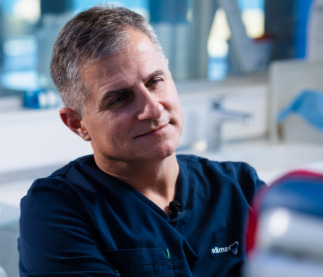
Darko Slovša and the Smile team
Specialist expertise, coordinated care.
Dr Darko Slovša, Dr. Sc., M.Sc., DDS, is a specialist in implantology and oral surgery. The Smile team brings together surgeons, dentists, dental technicians and assistants who work together throughout your treatment.