Save the tooth or remove it: when is endodontics (root canal treatment) the right choice?
Removing a tooth may initially seem the quickest and least expensive option, but it is rarely the best choice for long-term oral health when the tooth can be saved. With modern dentistry and the techniques used at Poliklinika Smile, extraction is considered after preservation options have been assessed.
The choice between saving and removing a tooth also affects quality of life. This article explains endodontics, or root canal treatment, the symptoms that need assessment, when treatment is appropriate and why preserving a natural tooth matters.
What is endodontics, and how can it save a tooth?
Endodontics is the field of dentistry concerned with diagnosing and treating diseases of the dental pulp, the inner tissue containing nerves, blood vessels and connective tissue. Root canal treatment is an endodontic procedure.
A tooth has a hard outer enamel layer, an inner dentine layer and a central pulp chamber. The pulp extends through the root canals towards the jawbone. Deep decay, a crack or trauma can allow bacteria inside and cause inflammation, known as pulpitis.
Inflamed tissue enclosed within the tooth creates pressure that can cause severe pain. Without timely treatment, bacteria may spread beyond the root tip into surrounding bone, producing a periapical lesion or an abscess containing pus.
Endodontic treatment removes infected or dead pulp, thoroughly cleans and disinfects the root canals and seals them with dedicated materials to prevent bacterial re-entry. This allows the natural tooth to remain in the mouth and continue functioning after restoration.
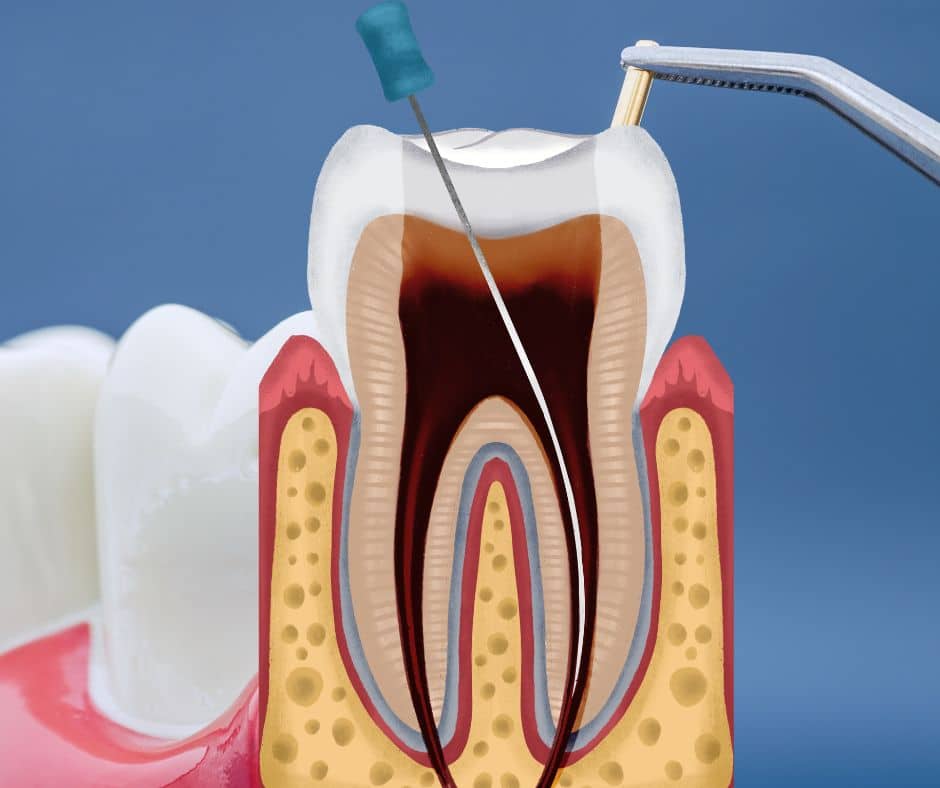
Tooth anatomy: what happens during infection?
Understanding the microscopic changes helps explain the role of root canal treatment.
| Tooth layer | Function | What happens during infection? |
| Enamel | The body’s hardest tissue, protecting the tooth from external influences. | Decay softens enamel and creates a route for bacteria. |
| Dentine | Porous tissue beneath enamel, containing microscopic tubules. | Bacteria can spread through dentine towards the centre of the tooth. |
| Dental pulp | Provides the tooth’s blood supply and sensation during development. | Swelling increases pressure and may lead to pulp death. |
| Root canals | Passages containing nerves and blood vessels through the roots. | Infection can extend along the canals towards the root tips and bone. |
When the pulp dies, pain may temporarily disappear. This does not mean recovery: infection can persist around the root and, without treatment, cause swelling, bone damage and tooth loss.
Symptoms that may indicate a need for root canal treatment
An examination and X-rays are needed to distinguish a superficial cavity from a problem requiring root canal treatment. The following signs warrant attention:
- Severe spontaneous pain: pain without an external trigger, especially at night or when lying down.
- Lingering sensitivity to heat or cold: sharp pain continuing for seconds or minutes after a hot coffee or cold drink.
- Pain when chewing or touching the tooth: a feeling that the tooth is too high or unusually sensitive to pressure.
- Tooth discolouration: a grey or dark brown tooth may indicate damage or death of the pulp.
- Gum swelling and tenderness: a small bump near the root, sometimes with a sinus tract draining pus.
- Persistent unpleasant taste or breath associated with infection in the root canals.
Pain disappearing does not prove that the problem has resolved. When the pulp dies, pain can stop while infection persists. Do not wait for swelling; arrange an examination when symptoms first appear.
Saving or removing a tooth: why preservation comes first
Losing a tooth, apart from certain wisdom tooth situations, can trigger changes in the mouth and jaw. The long-term effects should be understood before agreeing to extraction.
Reasons to consider root canal treatment and preservation include:
1. Preserving natural jaw and bone structure
After a tooth is extracted, the bone at that site loses its natural stimulation from chewing. The result is resorption, or loss of bone mass. In the first year after extraction, the bone at the site can lose up to 25% of its width. Preserving the natural root helps maintain bone density and volume.
2. Limiting movement of neighbouring teeth
Teeth form a coordinated system. When a gap develops, neighbouring teeth may tilt towards it and the opposing tooth may overerupt into the space because it has lost contact. This can contribute to:
- Bite problems, or malocclusion.
- Temporomandibular joint problems.
- More difficult cleaning and increased risk of decay and periodontal disease in remaining teeth.
3. Natural chewing sensation and appearance
Artificial materials cannot fully reproduce the periodontal ligament connecting a natural root to bone. Its pressure receptors provide precise feedback during chewing. Natural teeth also support lips and cheeks and help maintain facial contours.
4. Long-term cost
Although root canal treatment has an initial cost, it may cost less than extraction followed by replacement. A missing tooth may need an implant and crown or a bridge, which can require preparation of adjacent teeth. A well-treated and appropriately restored natural tooth can last many years, sometimes a lifetime.
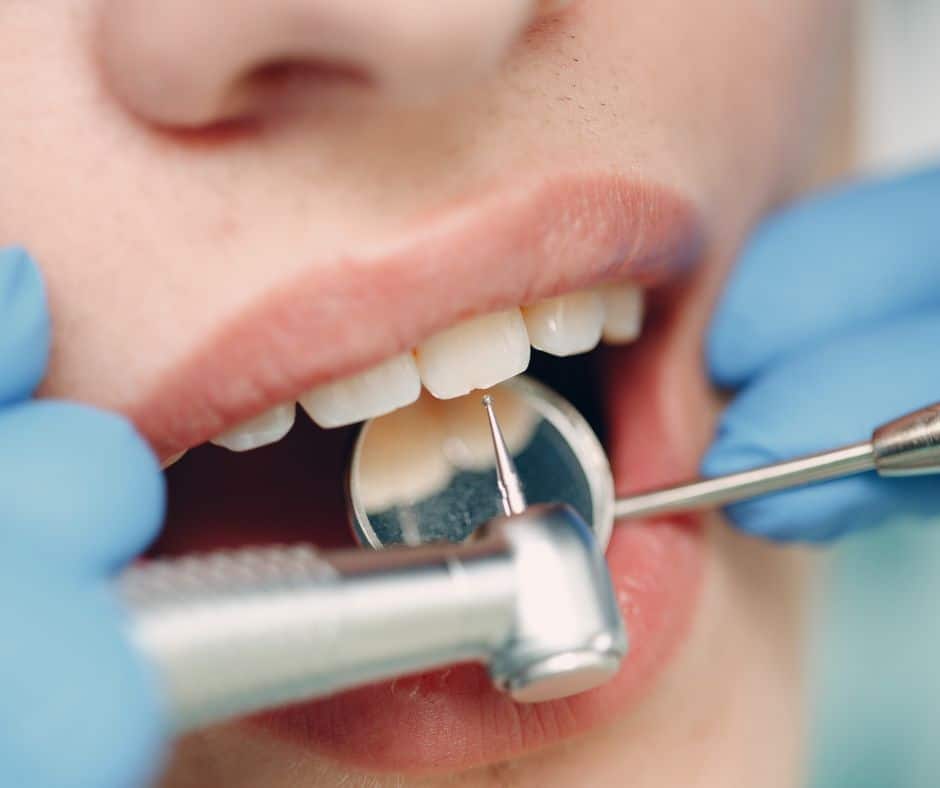
Comparing root canal treatment with extraction and replacement
The following comparison outlines the two approaches:
| Criterion | Root canal treatment | Extraction and implant |
| Natural tooth preservation | Yes — the natural root remains in the bone. | No — the natural tooth is permanently removed. |
| Treatment duration | Usually 1–2 dental appointments. | Several months, including integration of the implant with bone. |
| Surgery | No, for conventional non-surgical treatment. | Yes, for implant placement in bone. |
| Neighbouring teeth | Preserved without treatment. | An implant does not require adjacent tooth preparation; a conventional bridge may. |
| Chewing sensation | Natural feedback through the periodontal ligament. | Good function without the same natural ligament sensation. |
| Overall cost | Treatment plus restoration or crown. | Extraction, implant, abutment and crown, generally at higher cost. |
Modern root canal treatment, step by step
Modern local anaesthesia controls pain during root canal treatment. At Poliklinika Smile, current protocols and technology support precise diagnosis, cleaning and restoration.
Step 1: diagnosis and planning
Digital X-rays or, where needed, Planmeca® 3D CT (CBCT) assess canal number, shape and curvature and any inflammation around the roots.
Step 2: local anaesthesia
The area around the tooth is carefully anaesthetised before treatment. You may feel pressure while the dentist works; pain should be reported so anaesthesia can be checked.
Step 3: isolation with a rubber dam
A rubber dam isolates the tooth from the rest of the mouth. It helps prevent saliva and bacteria entering the open canals and protects against swallowing irrigation solutions.
Step 4: mechanical cleaning and shaping
After access to the pulp, dedicated motors and flexible instruments clean and shape the canals. Modern rotary instrumentation supports precise preparation, including in curved canals.
Step 5: disinfection and ozone therapy
The canals are irrigated with dedicated disinfectants to reduce bacteria throughout the canal system. At Poliklinika Smile, gaseous ozone is also used as an adjunct to disinfection, alongside standard mechanical preparation and irrigation.
Step 6: sealing the canals
Clean, dry canals are filled with biocompatible gutta-percha and a suitable sealer. The aim is to seal the space and reduce the opportunity for bacteria to re-enter.
Step 7: restoring and protecting the tooth
After treatment, the tooth needs an appropriate restoration according to how much natural structure remains:
- A tooth-coloured composite filling where the loss of tissue is limited.
- A zirconia or glass-ceramic crown where a large part of the natural crown is missing, covering the tooth to protect it under chewing forces.
When is extraction necessary?
At Poliklinika Smile, we aim to preserve natural teeth. However, some clinical situations cannot be predictably treated, making extraction the appropriate option for the patient’s health.
These situations may include:
- A vertical root fracture extending below bone level, making the tooth unrestorable.
- Extensive destruction: decay extending deeply beneath the gum and bone, leaving insufficient sound tissue for a restoration or crown.
- Advanced periodontitis: substantial loss of supporting bone with marked tooth mobility.
- Inaccessible canals or repeated treatment failure: extensive calcification or complex anatomy that prevents canal treatment, where apicectomy is also not feasible.
When extraction is unavoidable, implant dentistry offers options for replacing the missing tooth. At Poliklinika Smile, Straumann® implants support stable, natural-looking restorations.
Retreatment and apicectomy: another chance to preserve a tooth
If a previously root-treated tooth becomes painful again or an X-ray shows a new lesion, does it need extracting?
Not necessarily. Two further approaches may be considered:
- Root canal retreatment: previous root filling material is removed, and the canals are cleaned, disinfected and sealed again. Modern equipment can help address areas that were not adequately treated initially.
- Apicectomy: surgery accesses the root tip through the gum, removes the affected tip and surrounding inflamed tissue, and seals the canal from the root end with a retrograde filling.
These methods may preserve teeth that would otherwise require extraction.
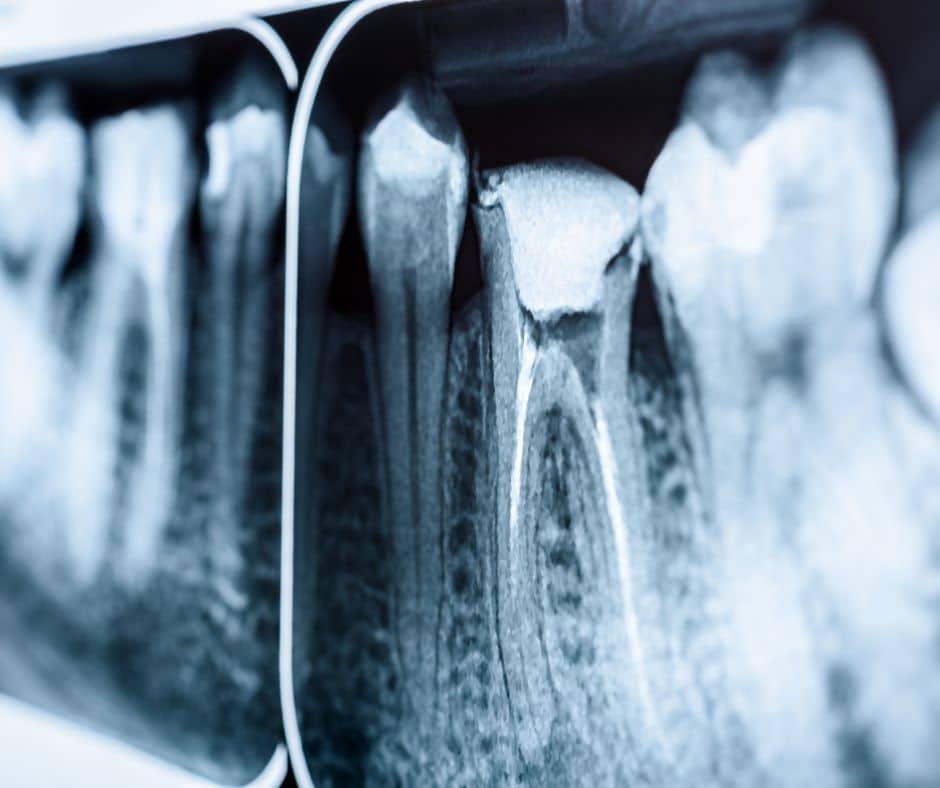
Common myths about root canal treatment
Misunderstandings about endodontics can create anxiety and affect treatment decisions. Here are three common examples:
Myth 1: “Root canal treatment is very painful.”
Modern endodontic treatment uses effective local anaesthesia and is often comparable in comfort to a filling. Its purpose is to treat the cause of pain.
Myth 2: “A root-treated tooth is dead tissue that causes disease.”
This idea comes from outdated early twentieth-century theories that have not been supported by modern evidence. A properly treated tooth can remain functional, attached to bone through living periodontal tissues.
Myth 3: “It is better to remove the tooth and place an implant immediately.”
Modern implants are valuable replacements, but cannot fully reproduce a natural tooth and its sensory feedback. When a tooth can be predictably preserved, that option should be assessed before replacement with an implant.
Recovery after root canal treatment
Mild tenderness to pressure may occur for a few days as the tissues around the root tip respond to previous inflammation and treatment.
To support a comfortable recovery:
- Avoid chewing on the treated side until the final filling or crown is fitted, protecting the temporary restoration.
- Use pain relief such as ibuprofen or paracetamol only as advised by your dentist and where suitable for you.
- Maintain careful brushing and interdental cleaning. The remaining natural tooth can still develop decay, and supporting tissues remain vulnerable to periodontal disease.
- Do not delay the final restoration. Until properly restored, the tooth is more exposed to fracture and bacterial re-entry.
Clinical standards and endodontic diagnosis
Successful endodontic care depends on accurate diagnosis and appropriate treatment protocols. At Poliklinika Smile, technology complements an approach that respects the tooth’s biology:
- Three-dimensional assessment: where indicated, Planmeca® CBCT can help identify additional canals, calcifications and lesions around root tips that may be difficult to assess on two-dimensional images.
- Additional disinfection methods: ozone therapy may complement standard mechanical and chemical canal treatment.
- Pain management and comfort: local anaesthesia supports comfortable treatment, with conscious sedation considered for significant anxiety or more extensive procedures.
- Restoring the tooth: zirconia-ceramic crowns or precise CAD/CAM restorations made in our digital laboratory protect the weakened tooth and support long-term function.
- Integrated oral care: each root canal treatment is considered in relation to chewing forces and periodontal health, with the aim of preserving natural teeth over time.
Making an informed choice for your tooth
The decision to save or remove a tooth should not be rushed or driven solely by fear of pain. At Poliklinika Smile, preservation is the first consideration whenever clinical conditions allow. Implants and prosthetic options are considered when preservation is no longer feasible.
Modern endodontics can treat many teeth that would previously have been extracted. If you have pain or sensitivity, or have been told extraction is the only option, a second opinion can help establish whether the natural tooth can still be saved.